

Immigration & Acculturation Psychiatry in Boston
The psychological weight of immigration is real and specific. We offer psychiatric care that understands it.
Physician-led psychiatry with deep experience in immigration stress, cultural identity, and bicultural experience
Treating anxiety, depression, trauma, and family conflict rooted in the immigration experience
In-person in Boston’s Back Bay, with telehealth available for established Massachusetts patients
1.
Request a consultation:
Submit the form or call.
2.
Office manager call:
We review basic clinic information and fit.
3.
Brief clinician screening (10–15 minutes):
Then our office manager books your first appointment.
Private-pay care enables time, continuity, and depth, with fees discussed during the office manager call.
Located in Back Bay and serving Beacon Hill, Brookline, Cambridge, Somerville, Newton, and surrounding areas. Telehealth is available for established patients in Massachusetts, and for new patients where in-person care is not accessible.
Appointments are often available within a week.


Immigration stress is a clinical reality, not a background detail
We hold culture, language, family, and identity as central to diagnosis and treatment
First-generation, second-generation, international students, and mixed-status families all seen
Psychodynamic and CBT-integrated care for adults, adolescents, and children
How We Think About Immigration and Mental Health
Immigration is among the most psychologically demanding experiences a person can undertake — and among the least addressed in mainstream psychiatric practice. The loss of community, the navigation of a new language and culture, the strain on family relationships, and the uncertainty of legal status create a specific kind of chronic stress that shapes mood, identity, and how symptoms present. You may be at the top of your profession or learning at an elite university but can still feel weighed down.
-
Migration is a loss as well as a gain
Immigration involves leaving: leaving family, a first language, a sense of knowing how to move through the world. Grief about what was left is real and often unprocessed. We take this seriously in our clinical work rather than treating it as background context.
The second generation carries its own weight
Children of immigrants often navigate two worlds simultaneously — the expectations and values of their family of origin and the culture of the country they grew up in. The tension between these, and the loyalty conflicts it produces, is a specific and common clinical presentation. We are experienced with it.
Documentation stress and structural uncertainty are clinical factors
Uncertainty about legal status, fear of deportation, and restricted access to services are not only political realities — they produce anxiety, hypervigilance, and depression that require clinical attention. We see these as part of the clinical picture, not outside it.
Who We Work With
First-generation immigrants
Adults who have immigrated to the United States navigating acculturation stress, grief about what was left, language and cultural barriers in daily life, and the psychological impact of a significant life disruption.
Second-generation and bicultural patients
Adults and adolescents raised between two cultures, navigating identity, family expectations, loyalty conflicts, and the experience of not fully belonging in either world.
International students and academics
Graduate students, researchers, and professionals living in Boston on a visa, navigating isolation, academic pressure, visa uncertainty, and the particular stress of being far from family without a community of support.
Immigrant families with a child in distress
Children and adolescents in immigrant families who are struggling with identity, school, and the tension between home culture and peer culture. Parents who are managing their own adjustment while trying to support a child.
LGBTQIA+ immigrants
LGBTQIA+ people who have immigrated from contexts where their identity was not accepted — navigating the intersection of cultural identity, family expectation, and sexual or gender identity. We are experienced with this specific intersection.
What we help with
Immigration stress and acculturation anxiety
Grief and loss related to migration
Cultural identity conflict and bicultural stress
Intergenerational family conflict in immigrant families
Depression and anxiety in first- and second-generation immigrants
Trauma related to migration, displacement, or country-of-origin experiences
Documentation stress and fear related to legal status
Isolation and loss of community after relocation
Language and communication stress
Identity conflicts in second-generation and bicultural adolescents
LGBTQIA+ identity in the context of immigration and family of origin
International student adjustment, visa stress, and academic pressure
-
A visa holder with a demanding academic position. Productive, respected, and deeply isolated. Far from family. No one here knows who you are outside of your work. Immigration-related depression often looks like burnout or adjustment — we know the difference.
-
Your parents came from somewhere else. You grew up here. At home you speak one language and follow one set of rules. Everywhere else, another. The exhaustion of that translation — cultural and psychological — is what we work with in second-generation patients. Do I protect my own happiness or that of my family who sacrificed so much for me? We grapple with difficult questions together to make sense of your place and belonging.
-
You came from a place where being LGBTQ+ was not safe, or not named. Now you are here, and you are trying to build an identity that your family cannot fully know. We work with LGBTQIA+ immigrants navigating the specific pressure of this double life. The freedom and isolation.
MEET OUR CLINICIANS
-
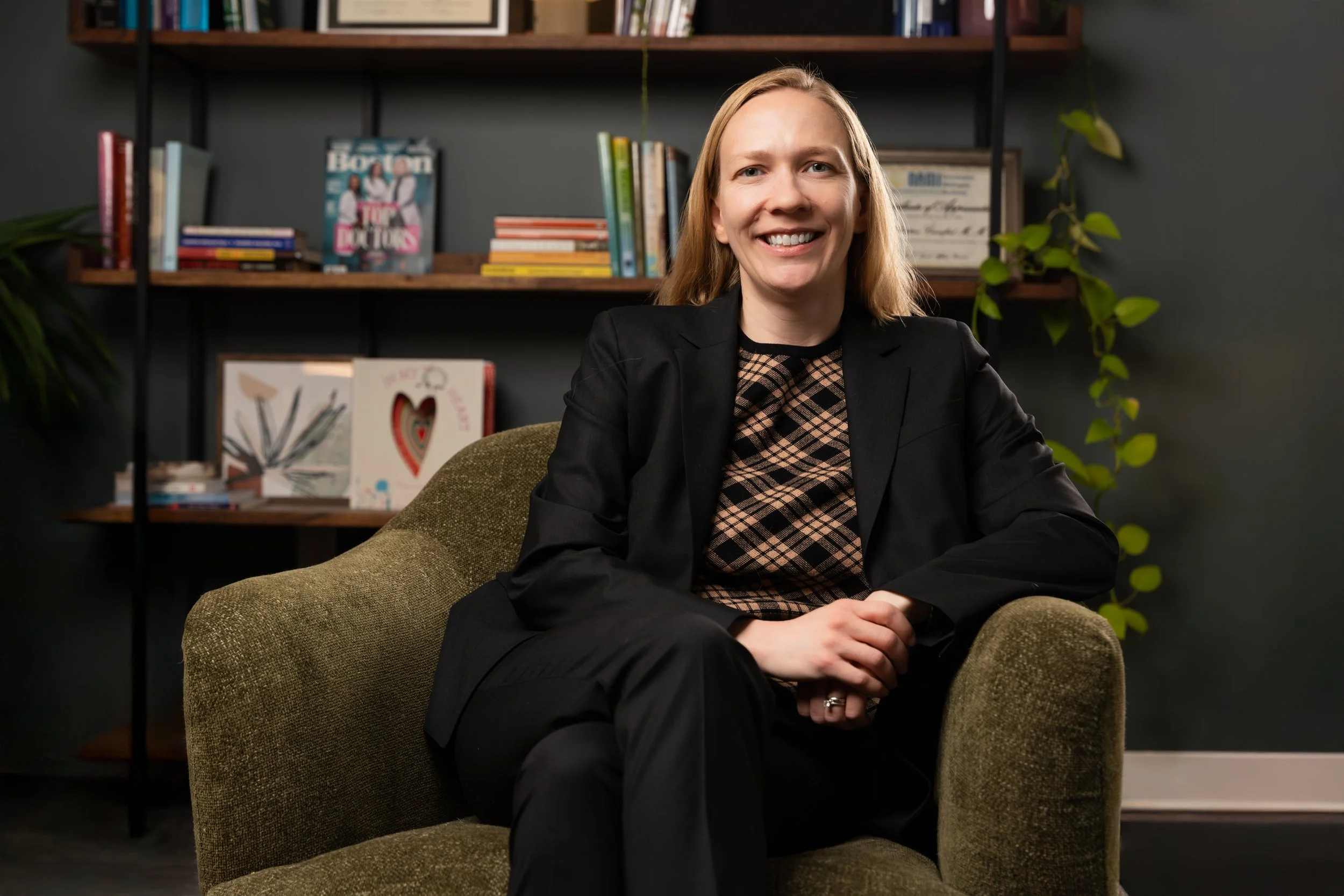
![Jacqueline Buchanan MD]()
Jacqueline Buchanan MD
Child, adolescent, and adult psychiatrist
Harvard/Cambridge Health Alliance trained. Relationship-based, trauma-informed care for children, adolescents, and adults. Psychotherapy embedded in every clinical relationship.
-
![Sundus Mari MD]()
Sundus Mari MD
Child, adolescent, and adult psychiatrist
Harvard/Boston Children’s Hospital trained. Attuned with children, adolescents, and adults straddling cultures and life changes. Psychotherapy at depth in English, German, and Arabic.
-
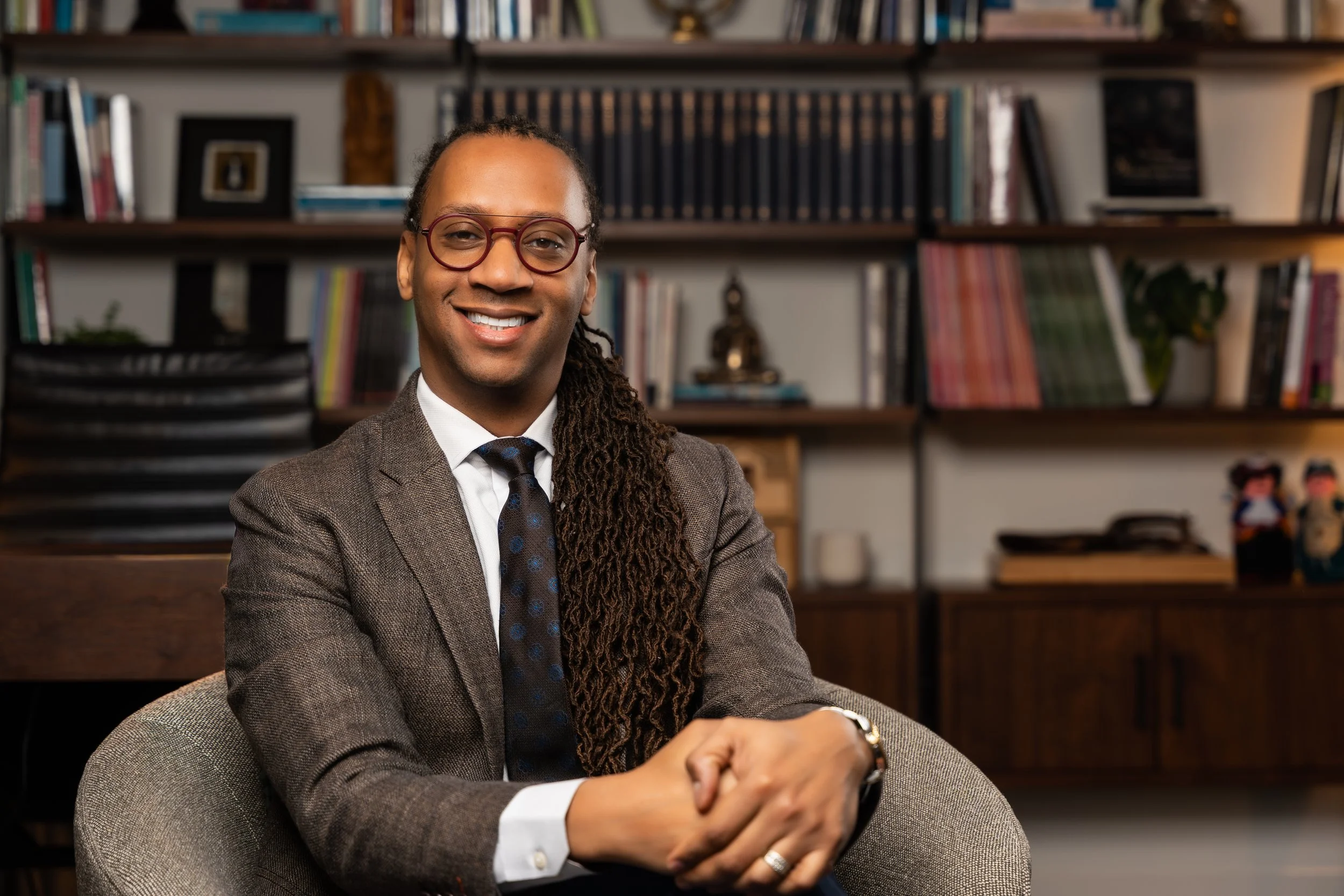
![Cecil R Webster Jr MD]()
Cecil R Webster Jr MD
Child, adolescent & adult psychiatrist · Psychoanalyst · Founder
Harvard Medical School physician-educator. Board member, Boston Psychoanalytic Society & Institute. Expertise in LGBTQ+ psychiatry, professionals of color, and psychoanalytic treatment. Harvard Health Publishing contributor.

FAQs
Do you speak languages other than English?
1
Our clinical sessions are currently conducted in English. We recognize this is a limitation for some patients and are sensitive to the added burden of conducting therapy in a second language. We discuss this openly as part of the clinical work when relevant.
Do you work with undocumented patients?
2
Yes. We are a private-pay practice and do not interact with immigration authorities. All clinical information is protected under standard medical confidentiality. Documentation status is never a barrier to care with us.
Do you treat trauma related to migration or country-of-origin experiences?
3
Yes. Trauma connected to displacement, political violence, family separation, or experiences in a country of origin is a specific area of clinical focus. We provide trauma-informed care as part of our standard practice.
Do you work with families where parents are immigrants but children are not?
4
Yes. Intergenerational family dynamics in immigrant families — including the tension between parental expectations and a child’s acculturated identity — are a common and specific presentation. We work with children, adolescents, and parents both separately and together.
Can parents see you separately from their college-age child?
5
Yes. In fact, regularly and often. We see graduate students, researchers, and international professionals navigating isolation, academic pressure, and the adjustment of living far from home. Telehealth is available for Massachusetts-based patients.
Can you provide documentation for immigration-related mental health proceedings?
6
In some circumstances, yes. We evaluate this on a case-by-case basis. Please raise this at your initial consultation.
Why choose a board-certified psychiatrist instead of a psychiatric nurse practitioner?
7
Both can be helpful, but a board-certified psychiatrist (MD/DO) brings full medical training and specialty residency, which matters for complex diagnosis, medical differentials, and nuanced long-term prescribing. In addition, all of our psychiatrists are experienced psychotherapists and/or psychoanalysts. We provide ample depth and breadth to treat your condition. Our model keeps prescribing embedded in an ongoing therapeutic relationship, not a protocol-only visit.
What does private-pay enable clinically?
8
Private-pay care protects time, continuity, and depth. It allows longer, unhurried evaluations, steadier follow-up, and treatment guided by clinical need rather than insurance-driven visit limits, diagnosis requirements, or fragmented “split” models of care.
How quickly can I be seen?
9
Appointments are often available within a week.
Yes. We offer in-person care in our comfortable Back Bay office and periodic telehealth for established patients. While we are located in Back Bay we also serve Beacon Hill, Brookline, Cambridge, Somerville, Newton, and surrounding areas.